Access issues for flats above shops Enfield rubbish solutions
Posted on 07/10/2026

If you live or work in a flat above a shop in Enfield, rubbish removal can be awkward in a way that people in houses rarely think about. Narrow stairwells, shared entrances, restricted loading, busy high streets, awkward parking, and the simple fact that the lift is out again. It all adds up. This guide on Access issues for flats above shops Enfield rubbish solutions explains how to deal with those access problems sensibly, safely, and without turning a normal clear-out into a half-day puzzle.
Truth be told, these jobs are often less about the rubbish itself and more about the route in and out. Once you understand the access, the rest becomes much easier. In the sections below, you'll find practical steps, common mistakes, comparison points, compliance considerations, and a realistic way to plan the job so you are not left carrying bags down a cramped staircase at 8am while the street below wakes up.
Whether you're clearing household waste, bulky items, mixed rubbish, or shop-related refuse from upstairs accommodation, the same principle applies: the better the access plan, the smoother the clearance.
- Why it matters
- How it works
- Key benefits
- Who needs this
- Step-by-step guidance
- Expert tips
- Common mistakes to avoid
- Tools, resources and recommendations
- Law, compliance, standards, or best practice
- Options, methods, or comparison table
- Case study or real-world example
- Practical checklist
- Conclusion
- Frequently asked questions
Why Access issues for flats above shops Enfield rubbish solutions Matters
Access issues matter because they change almost every part of a rubbish clearance job. A simple removal from a ground-floor property might be straightforward. A clearance from a flat above a parade of shops in Enfield is a different story. You may be dealing with tight entryways, shared hallways, fire exits that must stay clear, parking restrictions, noisy neighbours, and staircases that are just a bit too narrow for the sofa you've been meaning to get rid of for months.
That matters for three reasons. First, it affects safety. Second, it affects timing. Third, it affects cost and convenience. If access is poor and no one plans for it, the job usually takes longer than expected. People often underestimate how much time is lost just moving one item to the van, then back again because it won't fit through the door. Annoying? Absolutely. Avoidable? Usually, yes.
There's also a real reputational point here for landlords, shop owners, letting agents, and tenants alike. A tidy building with good waste handling feels organised. A hallway blocked by old furniture, broken appliances, or bin bags stacked near the stairs does not. You can smell the difference sometimes before you see it, especially in summer. Let's face it, nobody wants that.
For businesses operating beneath flats, access issues are even more sensitive because customer flow, deliveries, and safety all overlap. A clearance that blocks the pavement or creates a mess in front of a shop can cause friction fast. In busy Enfield locations, that can become a practical headache pretty quickly.
Practical takeaway: the less predictable the access, the more valuable good planning becomes. In many cases, the waste removal solution is not "more muscle" but "better logistics".
How Access issues for flats above shops Enfield rubbish solutions Works
There is no single method that suits every building. The right rubbish solution depends on where the flat is, what needs removing, how items can be carried out, and whether the property shares entrances or internal corridors with a retail unit below.
In simple terms, the process usually works like this:
- Assess the access route. Check stair width, doorway clearance, lift availability, bin storage location, parking, and any obstacles such as fire doors or low ceilings.
- Identify the waste type. Mixed rubbish, furniture, appliances, builders' waste, and commercial waste all behave differently. Heavy items need more lifting planning. Bagged waste needs volume planning.
- Plan the collection method. This may mean direct carry-out, staged removal, timed loading, or a combination of approaches.
- Prepare the building. Move smaller items out of the way, protect floors if needed, and make sure access is unlocked and clear.
- Load efficiently. The best teams work in a steady rhythm. No drama, no wasted trips, no blocking the staircase longer than necessary.
- Finish with a final sweep. Good rubbish solutions include tidying the route, not just removing the main pile.
In flats above shops, the access challenge often comes from the contrast between public-facing ground-floor space and private upstairs living space. A van cannot always park at the door. A bulky item may need to be turned at an angle, carried through a side entrance, or split down before removal. Sometimes the practical answer is to schedule the job outside the busiest trading period, early morning or later in the day when foot traffic drops. Small detail, big difference.
One thing people forget is that access issues are not only physical. Time access matters too. If the building manager only allows collection at a specific slot, or if a shop below needs to keep the front clear for customers, the whole job must be paced around that window. That is where experience helps.
Key Benefits and Practical Advantages
When access is planned properly, rubbish removal becomes calmer, cleaner, and often cheaper in real terms. Here are the main benefits people notice.
- Less disruption: Clear access means fewer delays, less noise, and less impact on residents or the shop below.
- Safer handling: With a mapped route, heavy or awkward items are less likely to cause damage or injury.
- Better use of time: The team spends less time improvising and more time actually clearing.
- Cleaner shared areas: Hallways, stairwells, and entrances are less likely to get scuffed, blocked, or dirty.
- Reduced stress: You know what is happening, where items are going, and who is doing what.
- Lower risk of complaints: Neighbours and shop staff are less likely to object when the clearance is tidy and quick.
There is also a practical money angle. Access problems can turn a small job into a fiddly one. If a team has to carry items down three floors, navigate a tight landing, and wait for a loading space to open, the job may take more labour than the waste volume suggests. That does not mean every awkward property costs more, but it does mean access quality matters as much as the pile size.
And for many people, the real benefit is psychological. A flat above a shop can feel cluttered for longer because waste is harder to shift. Once the clear-out starts, the pressure lifts. You feel it in the room. Less stuff, less noise, less background stress. Simple, but very real.
Who This Is For and When It Makes Sense
This type of rubbish solution is useful for a wide mix of people in Enfield. It is not just for landlords or commercial operators. In fact, the need often arises from everyday life.
- Tenants in flats above shops who need to clear old furniture, bags of rubbish, or end-of-tenancy items.
- Landlords and letting agents dealing with move-outs, void periods, or poorly left items.
- Shop owners whose upstairs accommodation or storage space has accumulated clutter.
- Property managers coordinating access, timing, and building rules.
- Small businesses sharing entrances, back routes, or loading spaces with residential units.
- Household clearers who simply cannot get bulky items down a narrow route alone.
It makes sense whenever access is the main barrier rather than the waste itself. If the rubbish is already bagged and ready but the route out is awkward, the main challenge is logistics. If the access is straightforward but the waste is mixed and heavy, the challenge shifts a bit. That distinction matters because it helps you choose the right service and avoid paying for the wrong type of help.
For example, if a flat above a parade near a busy high street has no lift and only a narrow stairwell, a standard "dump-and-go" mindset usually fails. You need a collection plan. If a property has rear access through a service yard, the job may be much smoother, but only if that route is actually usable and not blocked by deliveries or locked gates. Sounds obvious, yet that is exactly where people get caught out.
Step-by-Step Guidance
If you want the job to go smoothly, break it into stages. That is the cleanest way to deal with access issues for flats above shops Enfield rubbish solutions without turning it into a messy afternoon.
1. Walk the route first
Start by looking at the path from the flat to the vehicle. Measure the awkward bits in your head, if not on paper. Is there a bend in the stairwell? A door that opens the wrong way? A low ceiling near the landing? These small things decide whether a sofa comes out cleanly or ends up pivoted three times while everyone pretends this is normal.
2. Separate the waste by type
Keep bagged rubbish, furniture, white goods, and recyclable materials apart if possible. A clear pile is easier to handle and easier to load. Mixed waste can still be removed, but sorting first makes planning far easier and often speeds things up.
3. Decide whether items need dismantling
Some items are simply not worth forcing through a tight space in one piece. Flat-pack furniture, bed frames, wardrobes, and certain appliances may need partial dismantling. This is one of those moments where a little patience saves a lot of swearing. Not all of it, sadly, but enough.
4. Choose the right time slot
In busy Enfield streets, timing can be the difference between a calm job and a small traffic puzzle. Try to avoid peak trading hours if you can. Early or off-peak collections often work better for flats above shops because you reduce disruption to customers and residents alike.
5. Protect shared areas
Use floor protection if necessary, keep doors open only when safe, and avoid leaving bags in hallways longer than needed. If the building has a communal entrance, respect it. People notice that, especially in older blocks where sound carries and every footstep seems louder than it should be.
6. Load in a logical sequence
Put the heaviest or most awkward items on the vehicle first if the route allows it. That reduces repeated lifting and makes the rest of the clearance feel easier. A steady rhythm matters more than speed.
7. Check the final route and clean up
Once everything is out, do one last check. Look for stray packaging, missed bag handles, and any dust or debris left behind. The last five minutes often define the quality of the whole job.
Expert Tips for Better Results
People often ask what makes a difficult upstairs clearance easier. The answer is not glamorous. It is mostly planning, communication, and choosing the least awkward route. Still, there are a few things that genuinely help.
- Take photos before the job: A few clear pictures of the staircase, entrance, and waste pile help identify problems before collection day.
- Measure the large items: A quick length, width, and height can prevent a nasty surprise at the doorway.
- Tell everyone about access restrictions: If the shop below has delivery hours or the building has key-coded doors, say so early.
- Leave a clear landing space: Even half a metre of open floor can make the whole process smoother.
- Keep bins and bins stores separate from the route: Sounds obvious, but people do leave things in the way. Often.
- Use smaller loads if needed: Several short trips may be smarter than one ambitious attempt that ends in a blocked staircase.
One thing I would stress: do not treat access issues as a sign the clearance will fail. It just means the job needs a better plan. Most awkward properties can still be handled properly if the route is understood in advance. It is a bit like navigating a back street in winter rain; you just slow down, keep your eyes open, and do not pretend the shiny patch on the pavement is harmless.
If you are arranging a service, ask how the team handles tight stairs, shared entrances, or loading restrictions. A confident, practical answer is usually a good sign. Vague reassurance is not. You want someone who sounds like they have actually done the work, not someone reading from a polished brochure while your hallway gets smaller by the minute.

Common Mistakes to Avoid
Most access problems become worse because of a few very ordinary mistakes. Fortunately, they are avoidable.
- Not checking access before booking: If the team turns up to a locked rear gate or a blocked stairwell, time gets wasted immediately.
- Underestimating item size: A chair looks harmless until it reaches a narrow landing.
- Leaving waste mixed with valuables: This creates delays and stress. Sort first.
- Blocking communal areas: That invites complaints and can create safety issues.
- Ignoring parking and loading restrictions: A van that cannot stop nearby creates a second access problem outside the building.
- Forgetting the shop below is trading: Customers, deliveries, and footfall matter. A clearance that disrupts the ground floor causes avoidable friction.
- Trying to force oversized items through tight spaces: This risks damage to walls, railings, doors, and the item itself.
A smaller but common mistake is assuming every rubbish solution is the same. It is not. A bagged flat clearance is not the same as moving a worn-out sofa, and neither is the same as removing renovation waste from a unit above a retail premises. The access route, the timing, and the handling all change.
And honestly, people sometimes forget the human side. If you are sharing the building with residents or staff, a quick heads-up goes a long way. A small notice, a polite word, a short message. It avoids that awkward moment when someone comes out with shopping bags and finds a mattress occupying the staircase. Not ideal.
Tools, Resources and Recommendations
You do not need fancy equipment for every job, but the right tools make difficult access more manageable. Here is what often helps.
| Tool or resource | Why it helps | Best used for |
|---|---|---|
| Measuring tape | Checks whether bulky items will fit through doors and stair turns | Sofas, wardrobes, beds, appliances |
| Camera phone | Records stairwells, access points, and item condition | Pre-planning and quoting |
| Heavy-duty sacks | Helps keep loose waste contained and easier to move | General household rubbish |
| Protective gloves | Improves grip and reduces minor handling risks | Mixed waste and rough items |
| Floor protection | Reduces scuffs in shared entrances and stairwells | Communal buildings |
| Disassembly tools | Lets larger items be broken down into safer sections | Furniture and flat-pack waste |
For local context, it also helps to compare the job with nearby collection types. A service that handles domestic waste collection in Enfield may be a better fit for household bags and mixed clutter, while commercial waste removal in Enfield is more relevant where the shop below and the upstairs unit generate business-related waste. If the clearance includes old furniture, a dedicated furniture removal service can be the simplest route. For large appliances, white goods and appliance disposal in Enfield is often the safer choice.
If the clearance has a broader scope, there are also supporting services such as house clearance in Enfield and the full services overview, which can help you match the job to the right approach rather than guessing.
Law, Compliance, Standards, or Best Practice
When rubbish is removed from flats above shops, compliance is not something to treat casually. You do not need to become a legal expert, but you do need to understand the basics of duty, safety, and responsibility.
In practice, that means using a waste carrier that works responsibly, keeps records where necessary, and handles waste with appropriate care. It also means avoiding fly-tipping, not leaving waste in shared areas for longer than needed, and making sure anyone lifting heavy or awkward items is doing so safely. If the job involves commercial waste from a shop as well as household rubbish from upstairs, the sorting and handling standards may differ.
Best practice usually includes:
- checking whether the provider is appropriately registered or compliant for waste carriage
- making sure waste is not abandoned on pavements, stairwells, or communal landings
- separating recyclable material where practical
- protecting the building and public areas from damage
- planning the job so exits, fire routes, and access paths remain usable
- using sensible manual handling methods for heavy or awkward loads
If you want more detail on the operational side, it can help to review waste carrier licence and compliance, along with insurance and safety. Those pages are useful for understanding what a serious operator should be able to explain clearly. There is also a practical sustainability angle in recycling and sustainability, which is worth considering if your clearance contains reusable or recyclable items.
Best practice is not about being perfect. It is about being careful enough that the job does not create new problems while solving the old one. That's the real test.
Options, Methods, or Comparison Table
Not every access problem needs the same solution. Here is a simple comparison of common approaches for flats above shops in Enfield.
| Method | Best for | Pros | Limitations |
|---|---|---|---|
| Direct carry-out | Reasonable stair access and manageable item sizes | Fast, simple, often efficient | Not ideal for very narrow stairs or oversized items |
| Dismantling items first | Bulky furniture or awkward beds | Improves fit through tight spaces | Takes extra time and care |
| Timed collection | Busy retail areas or shared entrances | Reduces disruption | Requires coordination |
| Smaller staged loads | Hard access or long stair runs | Safer and more manageable | May take longer overall |
| Combined approach | Mixed rubbish with several access constraints | Flexible and practical | Needs good planning |
For many upstairs properties, the combined approach is the winner. That might mean dismantling one large item, carrying waste in smaller bags, and timing the loading to avoid the shop's busiest period. No single method is magic. The smartest solution is the one that matches the building, the waste, and the people using the building that day.
If you are comparing service styles, it can also help to look at how quickly you need the job done. For urgent clearances, urgent same-day rubbish clearance in Enfield is useful reading before you commit to a time-sensitive booking. If the job is more budget-conscious, avoiding hidden charges in rubbish removal is worth a look because access-related extras sometimes catch people out if they are not discussed upfront.
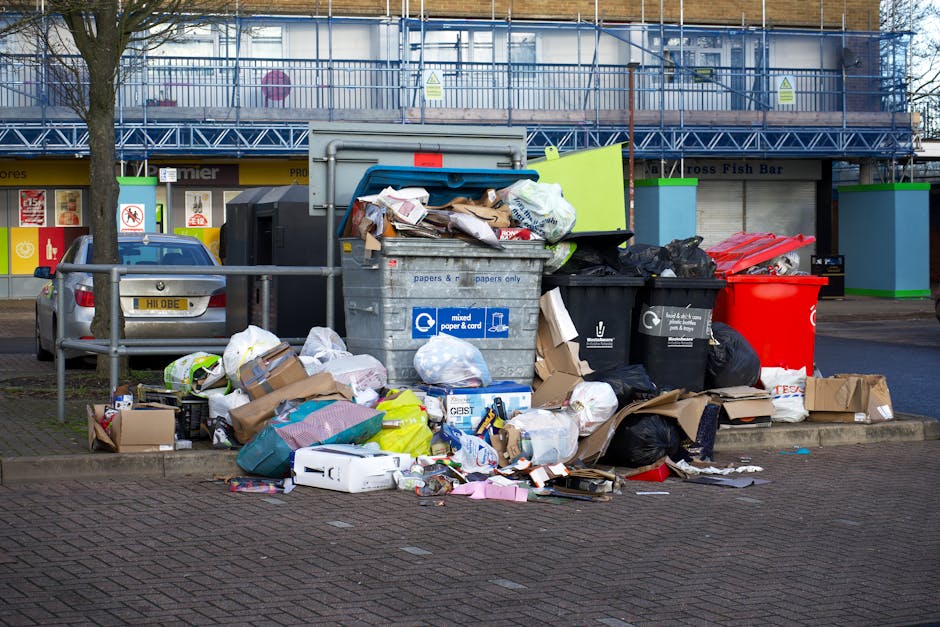
Case Study or Real-World Example
Here's a realistic example, without dressing it up too much. A tenant in a flat above a small shop in Enfield needed to clear a bedroom, a broken chest of drawers, several black bags, and an old mattress. The staircase was narrow, the building had a shared entrance, and the shop below opened early. On paper, it looked like a small job. In reality, access was the whole issue.
The solution was simple but careful. The collection was scheduled before the shop's main trading period. The mattress was carried out first, because it was the hardest item to turn on the landing. The drawers were partly dismantled to make them easier to handle. The bagged waste was grouped and moved in smaller loads rather than stacked all at once in the hall. One person kept the route clear while the other handled loading. No heroics. Just a bit of coordination.
The result? Less noise, less disruption, and no awkward blockages on the stairs. The tenant got the flat cleared without upsetting the shop below, and the building stayed presentable. The slightly boring version is usually the best version, by the way. If a clearance goes quietly, that is often a sign it was done well.
For a broader sense of how local areas affect waste planning, some readers also find it useful to look at nearby service guidance such as rubbish removal near Southbury Station or rubbish removal near Chase Farm Hospital, since busy streets, access routes, and timing can all shape the job.
Practical Checklist
Use this checklist before booking or starting a clearance from a flat above shops. It saves time. Quite a lot of time, sometimes.
- Confirm whether access is via front, rear, or internal entrance
- Check for lifts, stair width, tight turns, and low ceilings
- Measure the largest items
- Separate rubbish, furniture, appliances, and recyclables
- Ask whether items need dismantling
- Confirm parking or loading access near the building
- Check shop opening hours and any restrictions below
- Make sure communal areas are clear
- Arrange keys, codes, or building contact details in advance
- Protect floors and walls where needed
- Keep fire exits and shared corridors unobstructed
- Confirm what happens to reusable, recyclable, or special items
- Agree the timing so it does not clash with peak footfall
- Ask about compliance, insurance, and waste handling
- Do a final sweep once the job is complete
One quick tip: if you feel slightly unsure about any part of the route, mention it early. The worst jobs are the ones where everybody assumes someone else has checked the back gate. They never have. Or at least, not in time.
Expert summary: the best rubbish solution for flats above shops is usually the one that combines clear access planning, careful handling, and respect for the shared building. If those three things are in place, the rest is much easier.
Get a free quote today and see how much you can save.
Conclusion
Access issues for flats above shops in Enfield are frustrating, but they are rarely unbeatable. Most problems come down to route planning, timing, and using the right removal method for the space you actually have, not the one you wish you had. Once you treat access as part of the job rather than a side note, the whole process becomes calmer and far more predictable.
If you are dealing with a cramped stairwell, a shared entrance, a busy shopfront, or a pile of rubbish that seems to have grown legs, take a breath and work through the access first. That one decision can save time, reduce stress, and keep everyone on better terms with each other. And in a building where people live, work, and pass through all day, that counts for a lot.
Sometimes the cleanest solution is the simplest one. A little planning goes a long way. A surprisingly long way.


